Adam.LIFEDiscuss a mandate
← Selected work

03 / Architecture / Modernisation / Product

Modernisation with a controlled path to change.

A revenue-critical pricing operation depended on a deeply embedded spreadsheet estate. I mapped the systems and knowledge behind it, then designed a staged migration with historical replay, parallel testing and rollback, giving leadership a practical basis for investment and delivery decisions.

Explore the work
Client context
An established real-time data and pricing business
My role
Technology adviser to product and engineering leadership
Scope
Discovery, architecture and migration design
01 / CONTEXT

The situation.

The business needed to evolve a live pricing platform while continuing to serve customers. Years of business logic lived inside interconnected spreadsheets, with important knowledge concentrated in a small number of people. A new engine alone would not resolve the surrounding data, integration and operating risks.

My responsibility

I worked with product and engineering leaders to establish a shared picture of the existing estate: how data moved, where decisions happened, what the business relied on and which assumptions still needed testing.

02 / JUDGMENT

The decisions
behind the work.

  1. Understand before replacing

    Map the existing systems and knowledge dependencies. Make unresolved facts visible, with alternative paths where the evidence is incomplete.

  2. Prove the new engine alongside the existing one

    Design for operational history capture, versioned reference data and replay of real events. Compare outputs before making controlled changes, with a defined fallback.

  3. Give leadership decisions it can act on

    Pair the technical design with capability gaps, ownership, sequencing, key-person dependencies and measures of success.

A CLOSER LOOK

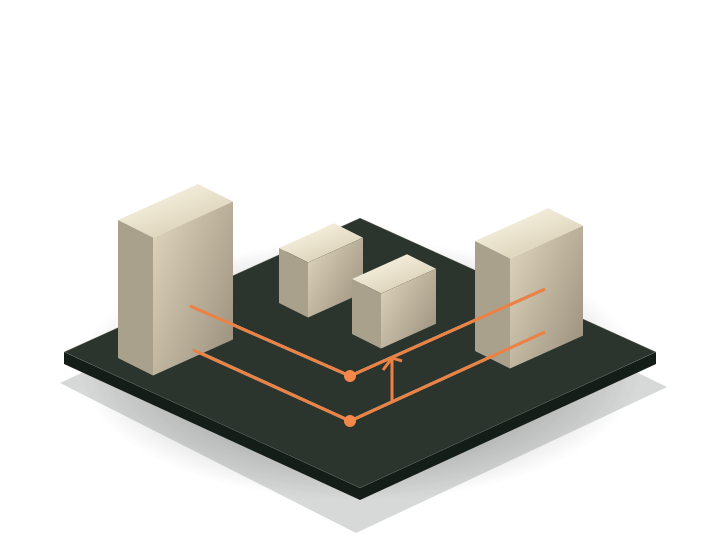
Prove the next system before the switch.

An illustration of the approach.

Existing platformReplay and compareControlled transition

Move in controlled stages, with a defined route back. This is the migration design, not a completed cutover.

Conceptual illustration · Client systems are not shown.

03 / OUTCOME

What the work
made possible.

This phase delivered an agreed view of the existing platform and a migration approach that leadership and engineering regarded as achievable. It gave the business a practical basis for implementation planning, with assumptions, dependencies and the route to validation made explicit.

Clarity
Shared system map
Control
Staged migration design
Accountability
Decisions and owners

THE NEXT CONVERSATION

A similar challenge?

Tell me about the organisation, the decisions ahead and the scope of the work.

Discuss a platform transition